Locking wheel nuts do a great job of deterring wheel thieves, right up until the day you need to change a tyre and the key is missing, damaged or simply will not fit. It is a surprisingly common problem, and it can turn a simple puncture into a stranded-at-the-roadside situation, which is exactly when roadside tyre repair becomes essential. This guide explains how locking wheel nuts work, why they cause trouble, what to try first, why you should not force them at home and how locking wheel nut removal is handled safely by a professional.
If you need help now, call 07415955735. Locking nut removal is part of our mobile tyre fitting service, and we bring the equipment to your home, workplace or roadside location in Oxford.
What Is a Locking Wheel Nut?
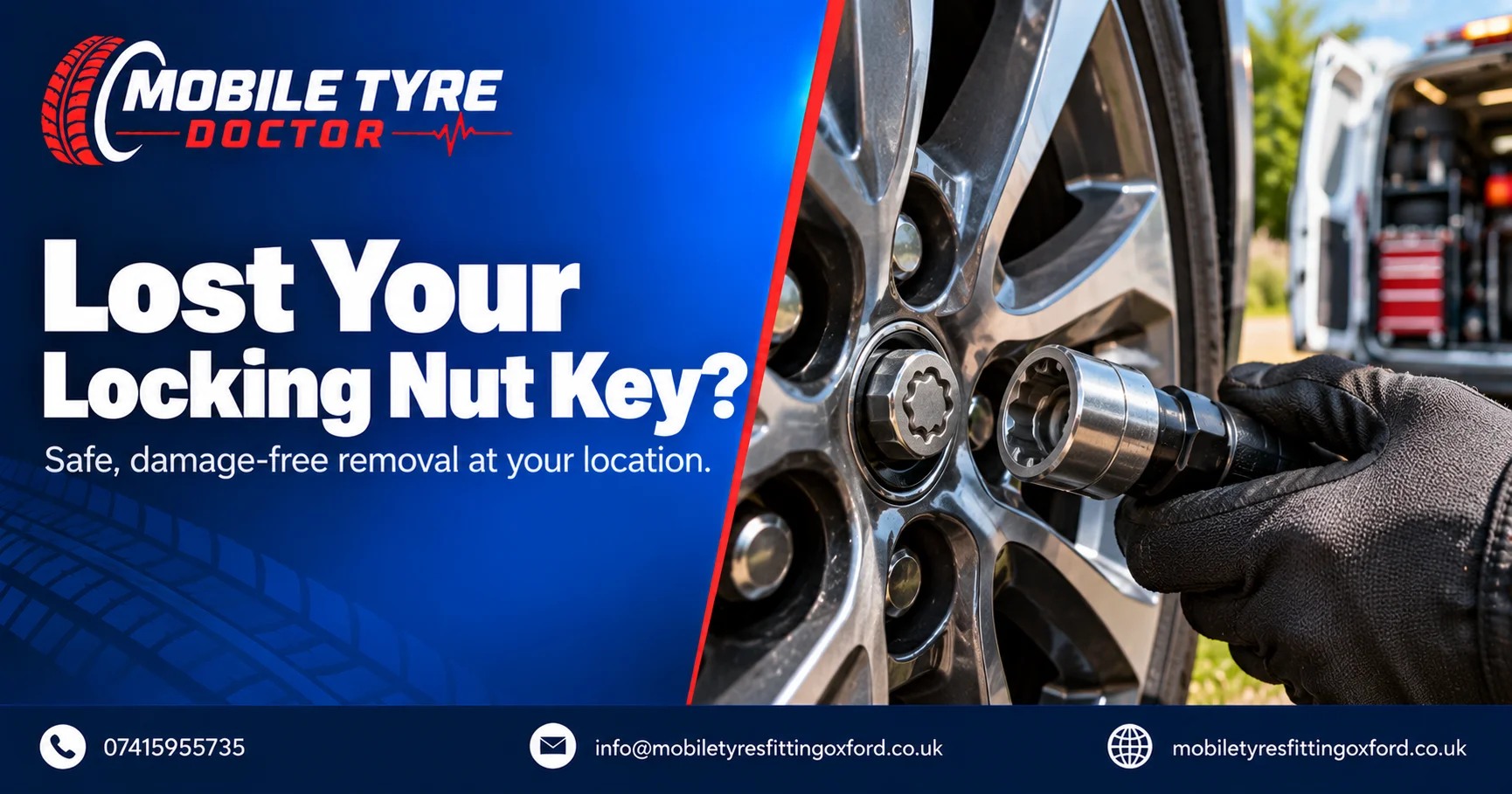
A locking wheel nut is a special security nut that replaces one of the standard nuts or bolts on each wheel. It can only be undone with a matching key, which fits onto the nut like a socket. The idea is simple: a thief cannot remove your wheels with an ordinary wrench. This is especially valuable for alloy wheels and premium cars, which are the most attractive targets.
How the Key Pattern Works
Each locking nut has a unique pattern, and the key has the matching pattern. A set normally includes four locking nuts, one per wheel, and a single key. Without that key, the nut cannot be turned with standard tools.
Where You Will Usually Find Them
Look at each wheel: one of the nuts will have an unusual shape or design, often with a decorative or patterned head. The key is usually stored in the glovebox, boot toolkit or spare wheel well. Some vehicles use locking bolts rather than nuts. For general wheel and tyre care, see our Tyre Safety Guide.
Why a Locking Wheel Nut Won’t Come Off
There are several reasons you might find yourself stuck, and the right fix depends on which one applies. Most people only discover the problem when they need a puncture repair or a new tyre, so it helps to know the causes in advance.
The Key Is Lost
This is the most common problem, especially after buying a second-hand car or moving house. The key is small and easily mislaid, and it may not have been handed over with the vehicle.
The Key Is Damaged or Worn
Over time the key’s pattern can wear down, or the key can crack or round off. A worn key may slip on the nut and damage it, so it is better to stop than to keep forcing it.
The Nut Has Been Over-Tightened
If a previous tyre fitter used an impact gun to tighten the locking nut, it can be extremely hard to undo with a hand key. This is also why it is worth asking for wheel nuts to be tightened properly to the manufacturer’s setting. Our article on mobile tyre fitting in Oxford explains what a good fitting visit involves.
The Nut Is Rounded or Corroded
Road salt, moisture and age can cause nuts to seize and the pattern to wear. A rounded or corroded nut can strip when the key is turned.
You Have the Wrong Key
It is easy to end up with a key from a different set, particularly if a car has had several owners or the wheels have been changed. A key that almost fits but not quite should not be forced. If you are unsure which key belongs to your car, our team can advise when you contact us.
Where to Look for a Spare Key Before You Call for Help
Before you call anyone, a quick search could save you time and money. Check:
- The glovebox, door pockets and centre console
- The boot toolkit and the spare wheel well
- The vehicle’s service book or paperwork, where a code card is sometimes kept
- Your home, in case the key was put away with other car items
- The previous owner, if you recently bought the car
Using a Key Code to Order a Replacement
Many locking nut sets come with a code card or a code printed on the packaging. If you have the code, the vehicle dealer or the nut manufacturer may be able to supply a replacement key, usually after you confirm ownership.
Why This May Not Help in an Emergency
Ordering a replacement key takes days, and it needs the code, which many owners have lost. If you are stuck with a flat tyre at the roadside, waiting for a key to arrive is not practical. Our guide to a flat tyre on the A34 or Oxford ring road explains what to do in that situation.
Why You Should Not Hammer, Drill or Force a Locking Nut at Home
Improvised methods tend to cause more problems than they solve. Forcing a locking nut can round the nut so it becomes harder to remove, damage the wheel’s nut seat, scratch or crack an alloy wheel and put you at risk of injury if a tool slips. A damaged wheel can also lead to vibration, which a fitter may address with wheel balancing.
Damage You Can Cause
- Cosmetic damage to alloy wheels that is expensive to refinish
- A rounded or sheared nut that now needs even more specialist work
- Damage to the wheel stud or bolt hole
- Personal injury from slipping tools
If you are not sure, it is worth calling a professional mobile tyre team to avoid an expensive wheel repair.
How Professionals Remove Locking Wheel Nuts
A professional uses purpose-made tools and knows how to protect the wheel while working. The aim is to remove the nut without damaging the wheel, stud or surrounding area.
Specialist Removal Methods
Hardened Extraction Sockets
The most common approach is to use a hardened extraction socket made for locking nuts.
How They Work
These sockets are designed to grip the outside of the nut firmly enough to turn it, without needing the original key.
Why Size and Fit Matter
Choosing the correct size is important. A socket that is too big or too small can slip, round the nut and make removal harder, which is why this is not a job to guess at.
Other Options for Stubborn Nuts
Badly rounded or seized nuts sometimes need extra care or alternative approaches. A professional will assess the nut and choose the method that protects the wheel best.
Why a Responsible Fitter May Ask for Proof of Ownership
Locking nuts exist to stop theft, so a responsible tyre professional will want to be sure the car belongs to the person asking. Keep your V5C logbook, insurance details or photo ID handy, and do not be surprised if you are asked to confirm that the vehicle is yours.
How a Mobile Tyre Fitter Removes a Locking Wheel Nut at Your Location
Here is how the job normally works with a mobile tyre fitter:
- You call, and share your location, vehicle details and what has happened to the nut or key.
- The fitter arrives with specialist equipment, so there is no need to go to a garage.
- The fitter confirms the vehicle is yours and inspects the nut and the wheel type, whether alloy or steel.
- The fitter selects the right removal tool and protects the wheel while working.
- The locking nut is removed carefully.
- The tyre work is completed, whether that is a puncture repair, a tyre replacement or a routine fitting.
- The wheel is refitted with standard nuts or a new locking set, tightened to the manufacturer’s specified torque.
- You receive any new key and advice on storing it safely.
Replacing or Upgrading Your Locking Wheel Nuts
After removal, you need to decide what goes back on the wheel:
- A new locking set: keeps the theft protection, and you will receive a new key and code
- Standard nuts: cheaper and simpler, but your wheels lose the added security
- Correct torque: whichever you choose, every nut should be tightened to the specification for your vehicle
If you drive a car with expensive alloy wheels, a new locking set is usually worth the small cost. Our Tyre Safety Guide has more on keeping your wheels and tyres safe.
How to Avoid Locking Wheel Nut Problems in Future
- Keep the key in one consistent place, such as the boot toolkit, and tell everyone who drives the car
- Take a photo of the key code and save it on your phone, and keep the original card with your car paperwork
- Test the key on each nut after any tyre or wheel work
- Ask garages to tighten the locking nut by hand or to the specified torque, and not to use an impact gun
- Keep the key clean and replace it if it shows wear
- Consider a spare key stored safely at home
Locking Wheel Nut Removal Across Oxford and Oxfordshire
Our mobile fitters cover Oxford and the surrounding area. Wherever you are, we can come to you:
In and around Oxford: Headington, Kennington, Botley and Cumnor.
North and west: Woodstock, Yarnton, Eynsham, Burford and Standlake.
South: Wantage.
See the full list of mobile tyre services we offer. If your problem began with a burst tyre, our guide to a tyre blowout explains what to do next.
Frequently Asked Questions
Can you change a tyre without the locking wheel nut key?
Not until the locking nut has been removed, because the wheel cannot be taken off without it. A mobile tyre fitter can remove the nut with specialist tools so the tyre work can go ahead.
Will removing the locking nut damage my alloy wheel?
The aim of professional removal is to avoid any damage to the wheel. Using the correct tools and protecting the wheel while working keeps the risk low, which is why forcing it at home is not recommended.
How do I find my locking wheel nut key code?
Check your vehicle paperwork, the original packaging or a code card that came with the nut set. Some owners also find it in the service book. A dealer or the nut manufacturer may be able to supply a replacement key from the code.
Can I drive without a locking wheel nut?
You should not drive with a missing wheel nut. Every nut must be fitted and tightened to the correct torque, so replace a missing locking nut with a new set or a standard nut straight away.
How much does locking wheel nut removal cost in Oxford?
The price depends on the nut, the wheel and the situation. Mobile tyre fitting in Oxford starts from £80 depending on the tyre type and service, so call 07415955735 for a quote.
Is locking wheel nut removal available 24/7?
Our mobile tyre fitting service runs 24 hours a day, seven days a week, and locking nut removal is one of the services we offer. Call us and we will arrange a fitter.
Do I need to prove the car is mine?
A responsible fitter will want to confirm you own the vehicle before removing a security nut. Having your V5C logbook, insurance details or photo ID to hand makes this quick and simple.
Locked Out of Your Wheels? Call for Locking Wheel Nut Removal in Oxford
Do not risk damaging your wheel by forcing a stuck or keyless locking nut. Call Mobile Tyre Doctor on 07415955735 and we will come to you. You can also contact us online or head back to our Mobile Tyre Fitting Oxford homepage.