A tyre blowout is one of the most alarming things a driver can experience: a sudden bang, a sharp pull on the steering and the unsettling feeling that the car has stopped doing what you ask. The good news is that blowouts are rare, and that knowing why they happen and how to respond makes a big difference to the outcome. For Oxfordshire drivers who use fast roads like the A34 and the M40, as well as pothole-scarred lanes around towns like Bicester, Woodstock and Eynsham, this knowledge is well worth having.
This guide explains what a tyre blowout actually is, the most common causes, exactly how to react while driving, what to do once you have stopped and how to prevent one in the first place. If you have just had a blowout, call 07415955735 and we will arrange 24/7 emergency tyre replacement wherever you are in Oxford.
What Is a Tyre Blowout?
A tyre blowout is a rapid, near-total loss of air pressure caused by the tyre’s structure failing. Instead of slowly going down, the tyre splits, tears or separates, often with a loud bang followed by flapping and vibration. Because the tyre can no longer carry the weight of the car, handling changes at once.
Blowout vs Puncture vs Slow Leak
These three problems are often mixed up, but they behave very differently:
- Blowout: sudden structural failure, immediate air loss, and a tyre that cannot be repaired
- Puncture: a nail, screw or sharp object in the tread, which may leak quickly or slowly. A small tread puncture can often be fixed through a mobile puncture repair
- Slow leak: gradual pressure loss over days or weeks, caused by a small puncture, a faulty valve or a poor seal. It gives you warning, and ignoring it is a common route to a blowout
If you are not sure what you are dealing with after a puncture, read our guide on what to do after a tyre puncture.
Warning Signs a Tyre Could Be About to Fail
- A bulge or blister on the sidewall
- Cracks, cuts or exposed cord on the tread or sidewall
- Repeated pressure loss in the same tyre
- Vibration at speed that was not there before
- Uneven or very worn tread
- A tyre that is many years old, even if the tread looks good
Our guide to the warning signs of damaged tyres goes through each of these in more detail.
The Main Causes of a Tyre Blowout
Almost every blowout traces back to one of a handful of causes. Understanding them is the first step towards preventing one.
Under-Inflation and Heat Build-Up
Why Low Pressure Is So Dangerous
A tyre that is run underinflated flexes far more than it was designed to. That extra flexing creates heat, which weakens the rubber and the internal structure. At motorway or A-road speeds, or when the car is heavily loaded, the weakened tyre can fail without warning.
Everyday Triggers of Low Pressure
Slow leaks, a faulty valve, cold weather that lowers pressure overnight and simply forgetting to check are the usual culprits. Most drivers do not notice a tyre that is 10 or 15 per cent low, but the tyre certainly feels the effects.
The Simple Habit That Prevents It
Check your pressures once a month when the tyres are cold, using the figures on the door-jamb sticker or in the handbook. Do not use the number moulded onto the tyre sidewall, because that is the tyre’s maximum rather than your car’s recommended pressure. Our Tyre Safety Guide has more on keeping tyres in good condition.
Impact Damage From Potholes and Kerbs
A hard hit from a pothole or kerb can break the internal cords of a tyre without leaving an obvious mark. The damage may only show as a bulge days or weeks later, and the weakened section can then burst under load. If you hit something hard, inspect the sidewall carefully and have it checked, using our guide to damaged tyre warning signs as a reference.
Overloading and Towing
Every tyre has a maximum load rating. Carrying more weight than your car or tyres are designed for, or towing without adjusting pressures, puts extra stress on the structure. Always check your vehicle handbook for the correct pressures when fully loaded.
Worn, Aged or Poorly Repaired Tyres
Worn tyres are more vulnerable to damage, and rubber hardens and cracks with age, even on tyres that have barely been used. Manufacturers generally recommend regular inspection once tyres are around five years old, and many advise replacement by about ten years. A poorly done previous repair can also fail. If you are unsure of a tyre’s condition, a mobile tyre replacement is better than guessing, and a mobile tyre fitting visit is a convenient way to have your tyres inspected.
Sharp Objects and Road Debris
Nails, screws, metal fragments and broken glass can pierce the tread, and a large cut can cause rapid air loss. This is more common on roads with roadworks, construction traffic or poor-quality surfaces. If you suspect you have driven over something sharp, a roadside tyre repair call-out can check the tyre before it fails.
Rare Manufacturing or Valve Faults
True manufacturing defects are rare, but they do happen. A faulty valve or a defect in the tyre’s construction can cause a sudden failure even on a tyre that has been looked after.
What to Do When a Tyre Blows Out While Driving
The first few seconds are the most important, and your natural instincts may work against you. Most people want to stamp on the brakes or yank the wheel. Both can cause a loss of control.
The Golden Rules
- Stay calm and grip the steering wheel firmly with both hands
- Do not brake hard
- Ease off the accelerator gently and let the car slow down on its own
- Steer smoothly, making small corrections rather than big movements
- Switch on your hazard lights and signal your intention to move over
- Only brake lightly once speed has dropped and the car feels stable
- Move to the safest available place and stop
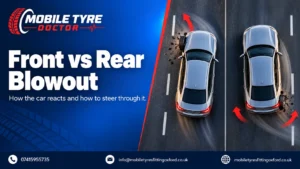
Front Tyre Blowout: What to Expect
A blown front tyre pulls the car towards the side with the damaged tyre, and the steering may feel heavy. Keep a firm hold of the wheel, steer gently against the pull and let the car slow down gradually.
Rear Tyre Blowout: What to Expect
A blown rear tyre usually makes the back of the car sway or fishtail. Look where you want the car to go, steer smoothly in that direction and avoid sudden inputs. As the car slows, it will become easier to control.
Blowouts in Cars With Run-Flat Tyres
Run-flat tyres have reinforced sidewalls that allow you to keep driving for a limited distance after a loss of pressure, typically at reduced speed. A common figure is around 50 mph for about 50 miles, but you should always follow your vehicle handbook. A run-flat that has been driven on while flat usually still needs to be replaced.
What to Do Once You Have Stopped
Once the car is stopped, your priority shifts from controlling the car to keeping everyone safe.
- Apply the handbrake and keep your hazard lights on.
- Leave through the side furthest from traffic only if you can reach safety. If you cannot, stay in the vehicle with seat belts and hazards on and call 999 for the police.
- Do not inspect the tyre while you are close to moving traffic.
- Do not drive on the blown tyre, even a short distance, unless you need to move to a safer spot.
- Call for help. On a motorway, use an emergency phone or call National Highways or your breakdown provider, and read our motorway tyre assistance page. Elsewhere, call a roadside tyre repair service.
- Wait in a safe place until help arrives.
For more detail on stopping safely on fast roads, read our guide to a flat tyre on the A34 or Oxford ring road.
Can a Blown Tyre Be Repaired?
In almost every case, no. After a blowout the tyre’s structure has been compromised, and sidewall damage cannot be repaired safely. The tyre needs to be replaced. A mobile tyre replacement means a fitter brings the right tyre to you and fits it on the spot.
Your fitter should also check what else the blowout may have affected: the wheel rim, the tyre pressure sensor, any nearby bodywork or suspension components, and the tyre on the other side of the same axle. If the remaining tyre on that axle is worn, replacing both may be recommended so that they match. After fitting, wheel balancing helps prevent vibration and uneven wear.
Is It Legal to Drive on a Damaged Tyre?
In the UK, tyres must be roadworthy. That means a minimum tread depth of 1.6 mm across the central three-quarters of the tread and around its entire circumference for cars, light vans and light trailers, with no unsafe damage. Drivers can face fines of up to £2,500 and three penalty points per defective tyre, and insurance claims can also be affected. Driving on a damaged tyre is a risk to you, your passengers and other road users. For everyday tyre basics, see our Tyre Safety Guide.
See the official tyre maintenance requirements and Highway Code breakdown guidance.
How to Prevent a Tyre Blowout
Prevention is simple and cheap compared with the cost and danger of a blowout.
Your Monthly Tyre Checklist
- Check pressures when the tyres are cold, including the spare
- Look at the tread and sidewalls for cuts, bulges and cracks
- Check for stones and debris; leave embedded nails or screws in place and have the tyre inspected
- Check that valve caps are fitted
- Note the age of each tyre from its sidewall markings
Habits Behind the Wheel
- Slow down for potholes, speed bumps and kerbs
- Do not overload the car, and adjust pressures when carrying heavy loads
- Stop and check if you hit something hard
- Never ignore the tyre pressure warning light
When to Replace Early
Replace a tyre at once if you see a bulge, a deep cut or exposed cord. Consider replacement if it is very old or close to the legal tread limit. If you are unsure, our mobile tyre fitting team can inspect your tyres, and you can ask about a free tyre health check when you contact us.
Blowout Help Across Oxford and Oxfordshire
Our fitters cover Oxford and the surrounding area, day and night. If you are in or near any of these places, help is only a phone call away:
Around Oxford: Headington, Horspath, Kennington and Culham.
North and west: Yarnton, Eynsham, Standlake, Burford and Bicester.
Further afield: Sutton Scotney.
If your wheel is fitted with locking nuts and you cannot find the key, read our guide to locking wheel nut removal. You can also browse all of our mobile tyre services.
Frequently Asked Questions
What does a tyre blowout feel like?
Most drivers describe a loud bang or thump followed by sudden vibration, flapping noise and a strong pull on the steering. The car may drift to one side or sway at the rear, depending on which tyre has failed.
Is a tyre blowout dangerous?
It can be, especially at speed, because handling changes suddenly. Staying calm, holding the wheel firmly, easing off the accelerator and avoiding hard braking give you the best chance of staying in control.
Should I brake if my tyre blows out?
Not hard. Heavy braking can unsettle the car and make it harder to steer. Lift off the accelerator, let the speed fall, and brake gently only once the car is stable.
Can I drive to a garage after a blowout?
No. Do not drive on a blown tyre, except to move a short distance to a safer place. A mobile tyre fitter can replace the tyre where you have stopped.
How much does a replacement tyre cost with mobile fitting in Oxford?
Prices start from £80, depending on the tyre type and the service required. Call 07415955735 with your tyre size or vehicle registration for a quote.
Can a tyre blowout be prevented?
Many can. Regular pressure checks, visual inspections, careful driving over potholes, staying within load limits and replacing worn or ageing tyres all reduce the risk significantly.
Do you attend tyre blowouts at night or on the motorway?
Yes, our service runs 24 hours a day, seven days a week. If you are on a motorway, move to safety first and follow National Highways guidance. Our motorway tyre assistance page explains how we help.
Had a Tyre Blowout? Call 24/7 Emergency Tyre Replacement in Oxford
If your tyre has burst, do not take chances. Get to a safe place and call Mobile Tyre Doctor on 07415955735. We will bring a fitter and the right tyre to you. You can also get in touch online or visit our Mobile Tyre Fitting Oxford homepage to see our full range of services.